


Starting solid foods is an exciting milestone for both babies and parents. Around 6 completed months, babies begin to need additional nutrients and energy alongside breast milk. This is when complementary feeding begins.
Complementary feeding does not mean stopping breastfeeding. Instead, nutritious foods are gradually introduced while breastfeeding continues.
For Indian families, familiar foods such as ragi, rice, dal, khichdi, curd, vegetables, fruits, eggs and appropriately prepared meat or fish can be included as part of a balanced diet.
This 6 to 24 months complementary feeding guide explains what to feed your baby, how much food to offer, appropriate textures, meal frequency, healthy food choices and foods to avoid.
Quick answer: Complementary foods are generally introduced at 6 completed months, alongside continued breastfeeding. Start with small quantities and soft textures, then gradually increase food variety, quantity and texture as your baby develops eating skills.
Key Takeaways
- Start complementary foods at around 6 completed months while continuing breastfeeding.
- Begin with small portions and gradually increase quantity, variety and texture.
- Include iron-rich foods, proteins, fruits, vegetables and healthy fats.
- Progress from mashed foods to thicker textures and soft finger foods as your baby develops.
- Avoid honey before 12 months, added sugar, sugary drinks, tea and coffee.
- Follow your baby’s hunger and fullness cues and avoid force-feeding.
- From 12 months, gradually introduce healthy, appropriately prepared family foods.
Table of Contents
What Is Complementary Feeding?
Complementary feeding is the gradual introduction of foods and liquids alongside breast milk when a baby’s nutritional requirements begin to exceed what breast milk alone can provide.
The purpose is to provide nutrients and energy while helping the baby develop eating skills such as chewing, swallowing, handling different textures and self-feeding.
A balanced complementary diet should provide important nutrients including:
- Iron
- Protein
- Healthy fats
- Vitamins
- Minerals
- Adequate energy
Every baby is different. Appetite can vary from one day to another, so parents should focus on responsive feeding rather than forcing a specific quantity.
Complementary Feeding From 6 to 8 Months

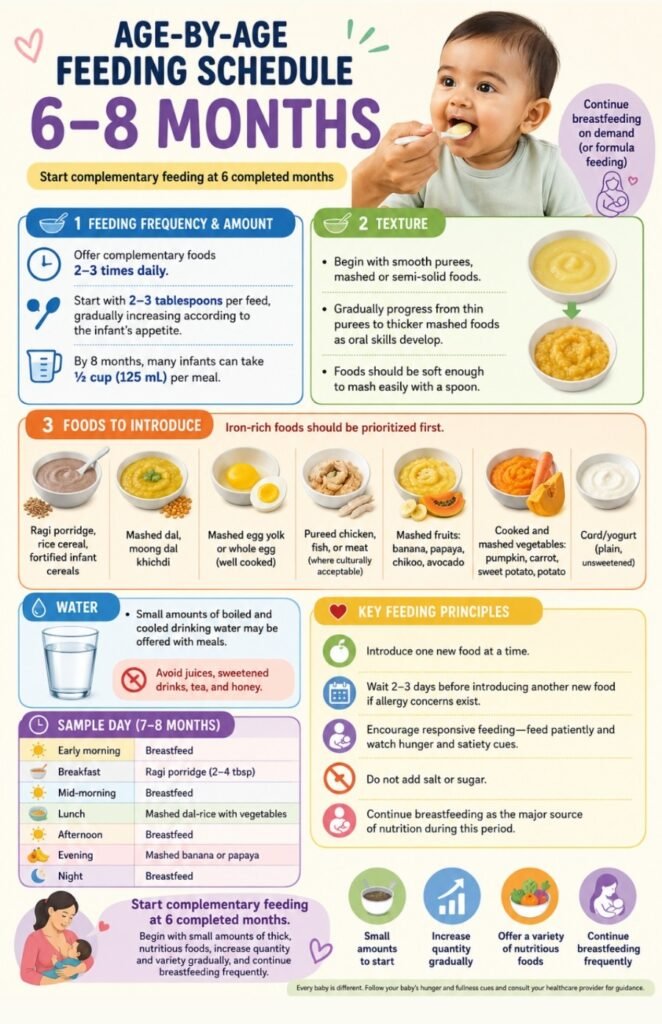
At 6 completed months, complementary foods can be introduced when your baby is developmentally ready.
Breastfeeding should continue alongside complementary foods.
1. How Much Food Should a 6-Month-Old Eat?
Begin with approximately 2 to 3 tablespoons per meal and gradually increase the amount according to your baby’s appetite and ability to eat.
Offer complementary foods around 2 to 3 times a day initially.
By around 8 months, many babies may manage approximately ½ cup (125 ml) per meal, although individual needs vary.
Do not force your baby to finish a particular quantity.
2. What Texture Should Food Be in 6 to 8 Months?
Initially, offer foods that are:
- Smooth
- Soft
- Mashed
- Semi-solid
- Easy to swallow
Gradually make foods thicker and less smooth as your baby develops better oral skills.
The goal is to move progressively from thin purées toward thicker mashed and soft foods.
3. Best Foods for a 6-Month-Old Baby
There is no single food that every baby must have as their first solid.
Suitable options include:
- Ragi porridge
- Fortified infant cereals
- Rice cereal
- Mashed dal
- Moong dal khichdi
- Well-cooked egg
- Puréed chicken, fish or meat
- Mashed banana
- Papaya
- Chikoo
- Avocado
- Cooked and mashed pumpkin
- Carrot
- Sweet potato
- Potato
- Plain, unsweetened curd or yogurt
4. Why Are Iron-Rich Foods Important for Babies?
Iron is an important nutrient during infancy. Include iron-rich foods regularly during complementary feeding.
Examples include:
- Dal and lentils
- Beans
- Eggs
- Meat
- Chicken
- Fish
- Iron-fortified infant cereals
A varied diet helps provide iron along with other nutrients needed for healthy growth and development.
5. Can a 6-Month-Old Baby Drink Water?
Once complementary foods are introduced, small amounts of safe drinking water can be offered with meals.
Breast milk continues to be an important source of nutrition and fluids.
6. Foods to Avoid at 6 to 8 Months
Avoid giving babies:
- Honey
- Added sugar
- Added salt
- Fruit juice
- Sugary drinks
- Tea
- Coffee
- Foods that may cause choking
Honey should not be given before 12 months because of the risk of infant botulism.
Sample 7 to 8 Month Baby Feeding Schedule
A sample feeding routine may look like this:
Time | Example |
Early morning | Breastfeeding |
Breakfast | Ragi porridge |
Mid-morning | Breastfeeding |
Lunch | Mashed dal-rice with soft vegetables |
Afternoon | Breastfeeding |
Evening | Mashed banana or papaya |
Night | Breastfeeding |
This is only a sample schedule. Your baby’s feeding pattern may be different depending on appetite, sleep and breastfeeding frequency.
Complementary Feeding From 9 to 11 Months

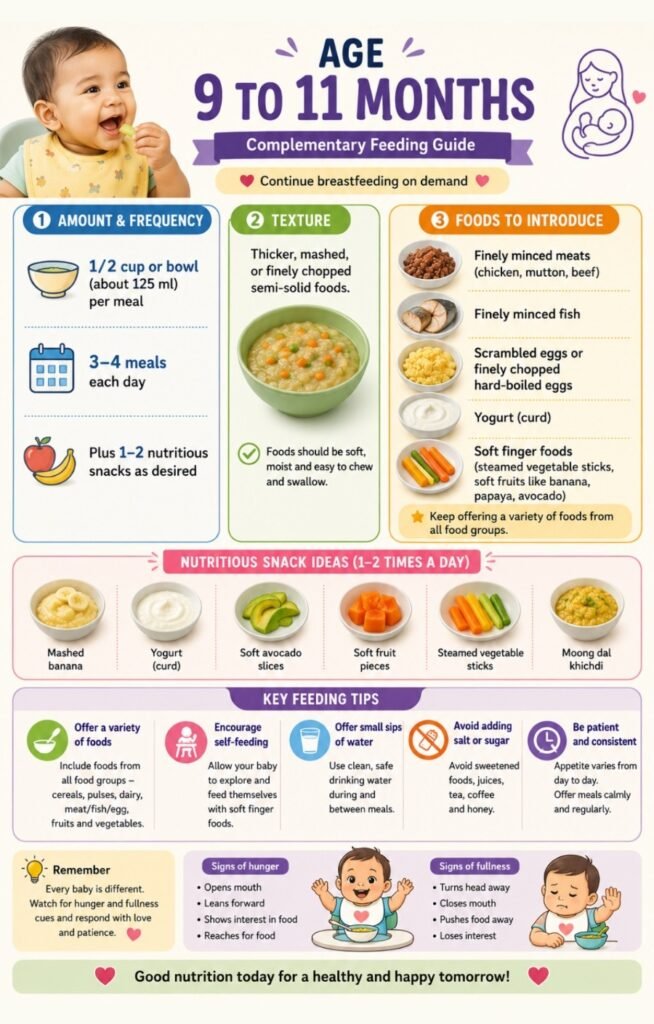
Between 9 and 11 months, babies can gradually handle thicker foods, soft finger foods and a wider variety of family foods. Continue breastfeeding according to your baby’s needs.
1. How Much Should a 9-Month-Old Eat?
Offer approximately ½ cup (125 ml) per meal, adjusting according to appetite.
A general routine may include:
- 3 to 4 meals per day
- 1 to 2 nutritious snacks, depending on appetite
- Continued breastfeeding
Some meals may be smaller and others larger. This variation can be normal.
2. What Texture Is Suitable for 9 to 11 Months?
Foods can now be:
- Thick
- Mashed
- Finely chopped
- Soft
- Moist
- Easy to chew and swallow
Soft finger foods can also be introduced when your baby is developmentally ready.
3. Finger Foods for 9 to 11 Months
Examples include:
- Soft steamed vegetable sticks
- Soft banana pieces
- Papaya
- Avocado
- Soft cooked vegetables
- Appropriately prepared egg
- Other soft, age-appropriate family foods
Always supervise your baby while eating.
4. Protein Foods for 9 to 11 Months
Offer a variety of protein-rich foods, including:
- Dal
- Lentils
- Beans
- Egg
- Chicken
- Fish
- Other appropriately prepared meats
- Plain curd or yogurt
Meat and fish should be prepared in a soft texture and finely minced or shredded as appropriate.
Eggs should be fully cooked.
Healthy Snack Ideas for 9 to 11 Months
Nutritious snack options include:
- Mashed banana
- Plain curd or yogurt
- Soft avocado
- Soft fruit
- Steamed vegetables
- Soft moong dal khichdi
Choose nutritious foods instead of packaged snacks and sugary foods.
Complementary Feeding From 12 to 24 Months

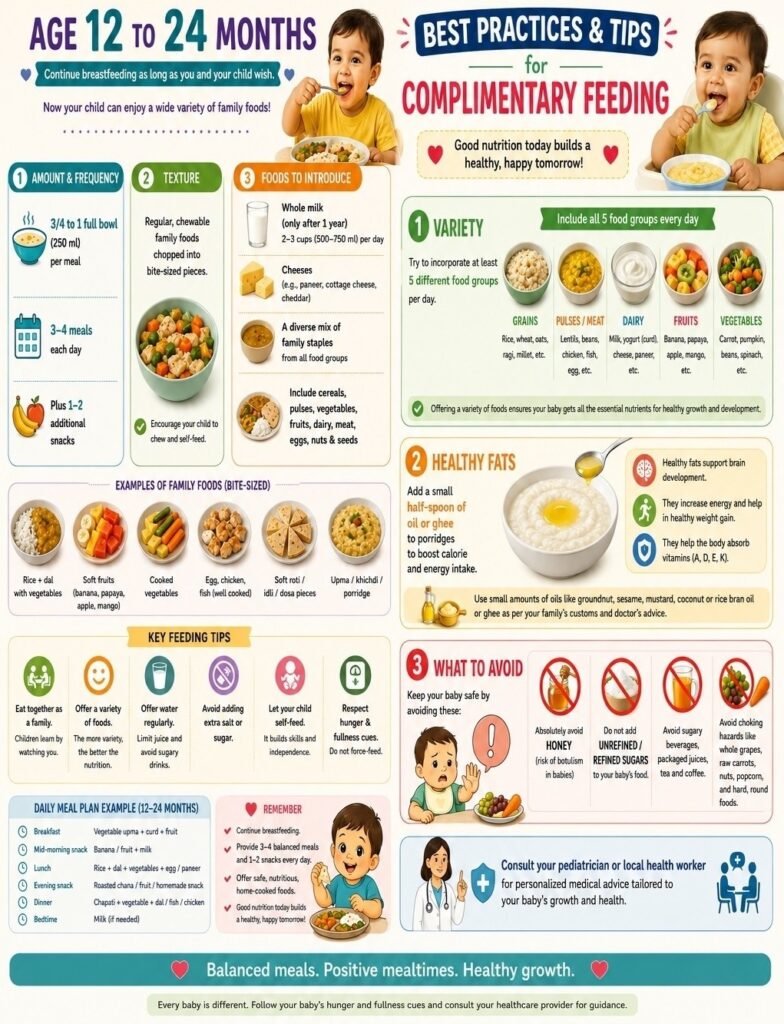
After 12 months, children can gradually eat a wider variety of healthy family foods with appropriate modifications for texture and choking safety.
Breastfeeding can continue for as long as the mother and child wish.
1. How Much Should a 1-Year-Old Eat?
A general guide is approximately ¾ to 1 cup (around 250 ml) per meal, depending on the child’s appetite.
Offer:
- 3 to 4 meals per day
- 1 to 2 nutritious snacks
- Appropriate milk and dairy foods
- Breastfeeding as desired
Toddlers often have unpredictable appetites. Some days they may eat more and other days less.
2. Can a 1-Year-Old Drink Cow’s Milk?
After 12 months, whole cow’s milk can generally be included as a drink as part of a balanced diet.
Milk should complement a varied diet rather than replace nutritious meals.
3. What Should a 1-Year-Old Eat?
A balanced toddler diet should include different food groups.
Grains and Cereals
- Rice
- Wheat
- Oats
- Ragi
- Millets
- Upma
- Chapati
Pulses and Protein Foods
- Dal
- Lentils
- Beans
- Egg
- Chicken
- Fish
- Other appropriately prepared meats
Dairy Foods
- Milk
- Plain curd
- Yogurt
- Paneer
- Cottage cheese
- Suitable cheese
Fruits
- Banana
- Papaya
- Mango
- Apple
- Avocado
- Other seasonal fruits
Vegetables
- Carrot
- Pumpkin
- Beans
- Sweet potato
- Spinach
- Potato
- Other seasonal vegetables

Healthy Fats for Babies and Toddlers
Healthy fats provide energy and help the body absorb fat-soluble vitamins.
Small amounts of suitable oils or ghee can be included in foods such as khichdi, porridge and vegetables.
Suitable options can include:
- Groundnut oil
- Sesame oil
- Mustard oil
- Coconut oil
- Rice bran oil
- Other suitable cooking oils
- Ghee
Use moderate quantities as part of an overall balanced diet.
Foods to Avoid During Complementary Feeding
1. Honey Before 12 Months
Avoid honey before 12 months because of the risk of infant botulism.
2. Added Sugar
Babies and young children do not need added sugar. Avoid routinely adding sugar, jaggery or other sweeteners to foods and drinks.
3. Sugary Drinks and Juice
Avoid packaged juices, sweetened beverages and other sugary drinks.
Whole fruits are generally a better choice than fruit juice.
4. Tea and Coffee
Tea and coffee are not appropriate drinks for babies and young toddlers.
They can also interfere with iron absorption when consumed around meals.
5. Choking Hazards
Young children are at risk of choking on foods that are hard, round, sticky or difficult to chew.
Examples include:
- Whole grapes
- Whole nuts
- Popcorn
- Raw hard carrot pieces
- Hard, round foods
- Large pieces of meat
- Other foods that are difficult to chew
Prepare foods according to your child’s developmental stage.
Children should sit upright and be supervised while eating.
Responsive Feeding: Let Your Baby Decide How Much to Eat
Responsive feeding means paying attention to your baby’s hunger and fullness cues.
Parents decide what nutritious foods to offer, when to offer them and where the child eats.
The child should generally be allowed to decide whether to eat and how much to eat.
1. Hunger Cues in Babies
Hunger cues may include:
- Reaching for food
- Opening the mouth
- Leaning toward food
- Showing interest when food is offered
2. Fullness Cues in Babies
Fullness cues may include:
- Turning the head away
- Closing the mouth
- Pushing food away
- Losing interest in eating
Avoid force-feeding or pressuring your child to finish a particular amount.
How to Introduce New Foods to Your Baby
Introduce new foods gradually and observe how your baby responds.
If your child has previously experienced a food allergy or has a higher risk of allergy, speak with your pediatrician about the safest approach to introducing potentially allergenic foods.
Possible symptoms of an allergic reaction can include:
- Hives or rash
- Swelling
- Vomiting
- Coughing
- Breathing difficulty
Breathing difficulty, significant swelling or signs of a severe allergic reaction require urgent medical attention.
Sample Indian Meal Plan for 12 to 24 Months
1. Breakfast
Vegetable upma + plain curd + fruit
2. Mid-Morning Snack
Banana or another seasonal fruit + milk
3. Lunch
Rice + dal + vegetables + egg or paneer
4. Evening Snack
Fruit, appropriately prepared roasted chana, or a nutritious homemade snack
5. Dinner
Chapati + vegetables + dal, fish or chicken
6. Bedtime
Milk if appropriate and desired
Meal quantities should be adjusted according to the child’s appetite and individual nutritional needs.
10 Important Complementary Feeding Tips for Parents
- Start complementary foods at around 6 completed months when your baby is developmentally ready.
- Continue breastfeeding alongside complementary foods.
- Offer iron-rich foods regularly.
- Gradually increase food quantity according to appetite.
- Progress from smooth textures to mashed, chopped and soft family foods.
- Offer foods from different food groups.
- Encourage age-appropriate self-feeding.
- Follow hunger and fullness cues.
- Avoid force-feeding.
- Avoid honey before 12 months, added sugar, sugary drinks, tea and coffee.
Final Takeaway
Complementary feeding is a gradual process. The goal is not simply to make your baby eat more food, but to build healthy eating skills while providing the nutrients needed for growth and development.
From 6 to 8 months, focus on soft nutritious foods, particularly iron-rich foods, while gradually increasing texture and variety.
From 9 to 11 months, introduce thicker textures, soft finger foods and a wider range of nutritious foods.
From 12 to 24 months, gradually transition your child toward a balanced family diet with suitable portions, textures and safe food preparation.
Most importantly, be patient, follow your child’s hunger and fullness cues, offer a variety of nutritious foods and avoid force-feeding.
Every child is unique. Growth, appetite, developmental readiness, allergies and medical conditions can affect feeding requirements. If you have concerns about your child’s growth, eating habits, anemia, allergies, constipation, food intolerance or nutritional intake, consult your pediatrician or qualified child-health professional for personalized advice.
Dr. Kuldip Shimpi – Pediatrician | Trusted Child Specialist is committed to helping parents make informed decisions about children’s nutrition, growth and development.
FAQs
(Frequently Asked Questions)
When should I start solid foods for my baby?
Complementary foods are generally introduced at 6 completed months, alongside continued breastfeeding, when the baby is developmentally ready.
How much food should I give my 6-month-old?
Start with around 2 to 3 tablespoons per meal and gradually increase the quantity based on your baby’s appetite and eating skills.
Can I give ragi to my 6-month-old baby?
Ragi can be included as a complementary food after 6 months when prepared in an age-appropriate soft texture. It should be part of a varied diet rather than the only food offered.
When can babies eat family food?
Babies can gradually move toward thicker and more varied family foods during the second half of the first year. Around 12 months, many children can eat appropriately prepared family foods.
Can babies have honey?
No. Do not give honey to babies younger than 12 months because of the risk of infant botulism.
Should I force my baby to finish eating?
No. Encourage your baby to eat, but avoid force-feeding. Appetite naturally changes from day to day.