

Dengue Fever: Warning Signs That Need Hospital Care

Dengue Fever: 7 Warning Signs That Need Hospital Care

dengue fever warning signs

Dengue fever is a mosquito-borne viral infection that can cause symptoms ranging from mild fever and body aches to serious complications requiring hospital care. Recognizing dengue fever warning signs early is important because some patients develop severe symptoms just as their fever begins to subside. Severe abdominal pain, persistent vomiting, bleeding, breathing difficulty, and unusual drowsiness require urgent medical assessment. Knowing when to seek care can help patients and caregivers respond promptly and avoid dangerous delays.

Key Takeaways 

  • Dengue fever commonly causes high fever, headache, pain behind the eyes, muscle pain, joint pain, nausea, and skin rash.
  • Dengue fever warning signs may appear around the time the fever decreases, often during the critical phase of illness.
  • Severe abdominal pain, repeated vomiting, bleeding, breathing difficulty, and extreme weakness require urgent medical attention.
  • A falling fever does not always mean the infection is improving.
  • Dengue management depends on clinical assessment, hydration, monitoring, and medical advice.
  • Do not self-medicate or use aspirin or ibuprofen for suspected dengue because these medicines can increase bleeding risk.
  • Remove mosquito breeding sites and prevent mosquito bites to reduce dengue transmission.

Table of Contents 

What Is Dengue Fever?

Dengue fever is a viral infection transmitted to humans through the bites of infected Aedes mosquitoes, particularly Aedes aegypti. These mosquitoes often bite during the daytime and can breed in standing water around homes, workplaces, and other populated areas.

Dengue infections may be mild or may progress to severe dengue, which can cause plasma leakage, shock, severe bleeding, or organ impairment. Not every person with dengue develops complications, but early recognition and appropriate medical monitoring are important.

Symptoms usually begin several days after an infected mosquito bite. The illness may last about a week, although recovery can take longer depending on its severity and the person’s overall health.

What Are the Common Symptoms of Dengue Fever?

Dengue fever symptoms can resemble those of other viral infections. A clinical assessment may be necessary to determine the cause of the fever.

Common symptoms include:

  • Sudden high fever
  • Severe headache
  • Pain behind the eyes
  • Muscle and joint pain
  • Nausea or vomiting
  • Skin rash
  • Fatigue and weakness
  • Reduced appetite

Some people experience only mild symptoms, while others may develop complications. Symptoms alone cannot reliably determine whether a person has dengue or predict how severe the illness will become.

Dengue Fever Warning Signs That Need Hospital Care

Dengue fever warning signs are symptoms that may indicate progression to severe dengue. They can develop during the critical phase, often around the time the fever starts to decrease, commonly between days 3 and 7 of the illness.

A reduction in temperature should not automatically be considered a sign of recovery. Patients and caregivers should remain alert to new or worsening symptoms.

World Health Organization (WHO), Dengue and severe dengue; Centers for Disease Control and Prevention (CDC), Clinical Features of Dengue and Symptoms of Dengue and Testing.
dengue-warning-signs-medisure

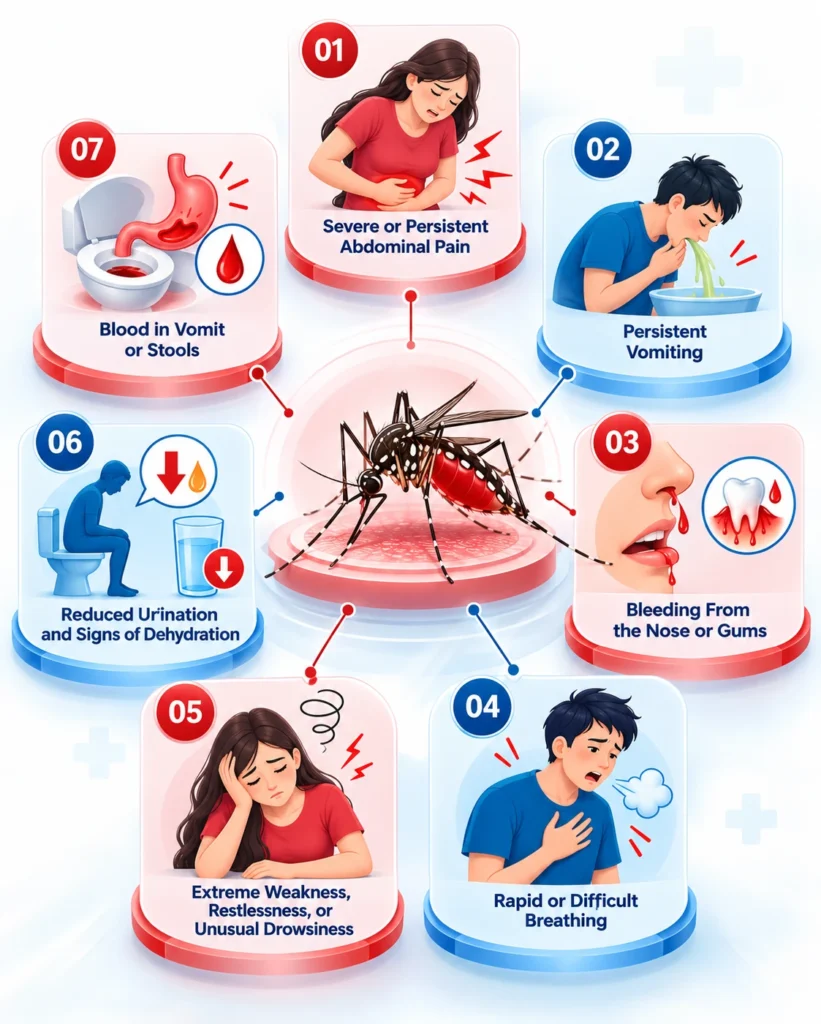
1. Severe or Persistent Abdominal Pain

Strong, continuous, or worsening abdominal pain can be a warning sign of severe dengue. It may occur alongside vomiting, tenderness, or other signs of deterioration.

Seek urgent medical assessment if abdominal pain is severe or persistent, particularly when accompanied by weakness, bleeding, or repeated vomiting.

2. Persistent Vomiting

Repeated vomiting can cause dehydration and may signal a more serious illness. Difficulty keeping fluids down is especially concerning because adequate hydration is an important part of dengue management.

Contact a healthcare professional promptly if vomiting continues. Seek emergency care if the patient becomes faint, confused, extremely weak, or develops other warning signs.

3. Bleeding From the Nose or Gums

Bleeding from the nose or gums, blood in vomit, or blood in stools may indicate a serious complication. Unusually heavy menstrual bleeding can also require urgent assessment.

Any unexplained or significant bleeding during suspected or confirmed dengue should be taken seriously. Do not wait for a particular platelet count before seeking medical care.

4. Rapid or Difficult Breathing

Breathing difficulty can indicate a serious complication, including fluid accumulation or other organ problems.

If a patient develops difficulty breathing, seek emergency medical care immediately. Do not delay assessment while waiting for the fever to return or for laboratory results.

5. Extreme Weakness, Restlessness, or Unusual Drowsiness

Severe weakness, agitation, confusion, fainting, or unusual sleepiness can indicate deterioration. Cold or clammy skin and a feeling of collapse may also be concerning.

These symptoms require urgent assessment, especially if they appear when the fever begins to settle.

6. Reduced Urination and Signs of Dehydration

Dengue can lead to dehydration, particularly when fever, sweating, vomiting, or poor fluid intake are present.

Warning signs include:

  • Passing much less urine than usual
  • Dry mouth and intense thirst
  • Dizziness, particularly when standing
  • Unusual lethargy or weakness
  • Difficulty drinking enough fluids

Markedly reduced urination, fainting, or worsening weakness warrants urgent medical evaluation.

7. Blood in Vomit or Stools

Blood in vomit or stools, including black, tar-like stools, may indicate gastrointestinal bleeding. This is a medical emergency in someone with suspected or confirmed dengue.

Seek emergency care immediately rather than attempting home treatment.

When Should You Go to the Hospital for Dengue?

Knowing when to go to hospital for dengue can help patients and caregivers act without delay.

Seek emergency medical care immediately if any of these occur:

  • Difficulty breathing
  • Severe or persistent abdominal pain
  • Repeated vomiting with inability to keep fluids down
  • Significant bleeding
  • Confusion, fainting, or unusual drowsiness
  • Cold, clammy skin or signs of collapse

Arrange prompt medical assessment for suspected dengue, especially if the patient is a young child, an older adult, pregnant, or living with a significant chronic medical condition. A healthcare professional can determine whether outpatient monitoring or hospital observation is appropriate.

Even without obvious warning signs, seek medical advice if symptoms worsen, fluid intake becomes inadequate, or urine output drops significantly. Do not wait for all the warning signs to appear.

How Is Dengue Fever Diagnosed and Monitored?

Dengue diagnosis involves assessing symptoms, the timing of the illness, travel or mosquito exposure, physical examination findings, and appropriate laboratory tests.

Depending on the stage of illness, a healthcare professional may recommend:

  • NS1 antigen testing or molecular testing during the early phase
  • Dengue IgM antibody testing at an appropriate stage
  • A complete blood count to assess platelet levels and haematocrit
  • Repeat blood tests or clinical reviews when indicated

A single platelet count does not tell the whole story. Doctors consider the patient’s symptoms, vital signs, hydration, urine output, bleeding, and changes in blood results over time.

A normal early test or platelet count does not always rule out later complications. Follow the clinician’s instructions about repeat testing and review appointments.

How Is Dengue Fever Managed?

There is no specific routine antiviral treatment that cures dengue. Management focuses on supportive care, maintaining appropriate hydration, monitoring for complications, and treating problems under medical supervision.

1. Maintain Appropriate Hydration

Patients who can drink safely may be advised to take oral fluids regularly. The appropriate amount and type of fluid depend on the patient’s age, clinical condition, and other medical conditions.

Patients with persistent vomiting, severe dehydration, or warning signs may require hospital-based assessment and carefully monitored fluids.

2. Rest and Monitor Symptoms

Adequate rest and observation are important during recovery. Keep track of fluid intake, urine output, fever progression, and any new symptoms.

Follow the healthcare professional’s advice about review appointments and tests, including during the period when the fever is subsiding.

3. Avoid Unsafe Self-Medication

Aspirin and non-steroidal anti-inflammatory medicines such as ibuprofen are generally avoided in suspected dengue because they may increase bleeding risk. Consult a qualified healthcare professional about appropriate fever management.

Do not start antibiotics, steroids, or other medicines without medical advice. Do not stop prescribed medicines without discussing them with the treating clinician.

4. Follow Medical Advice on Hospital Observation

Hospital care may be necessary when warning signs, significant dehydration, bleeding, shock, organ impairment, or other risk factors are present.

The decision to admit a patient depends on clinical findings and individual risk. Neither a falling fever nor a particular platelet count alone determines whether hospital care is necessary.

How Can You Prevent Dengue Fever?

Dengue prevention focuses on avoiding mosquito bites and reducing mosquito breeding sites.

Practical preventive measures include:

  • Empty and clean water containers regularly.
  • Cover water-storage tanks and containers securely.
  • Remove stagnant water from pots, tyres, trays, and other items.
  • Use mosquito repellents according to their label instructions.
  • Wear clothing that covers the arms and legs when practical.
  • Use window screens and mosquito nets where appropriate.
  • Check indoor and outdoor areas for mosquito breeding sites.

Community participation is important because mosquitoes can breed in small amounts of standing water around homes and public spaces.

Conclusion

Recognizing dengue fever warning signs is essential because severe complications can develop even when the fever begins to subside. Severe abdominal pain, persistent vomiting, bleeding, breathing difficulty, confusion, extreme weakness, and markedly reduced urination require prompt medical attention.

Do not rely on fever levels or platelet counts alone to judge the severity of dengue. Timely clinical assessment, appropriate hydration, medical monitoring, and mosquito-bite prevention are important parts of dengue care. If warning signs develop, seek urgent medical care rather than waiting for symptoms to improve.

If you notice any dengue fever warning signs or need medical guidance regarding dengue symptoms, complications, or recovery, consult Dr. Nitin Satav, General Physician, for appropriate medical evaluation and personalized care.

Remember: Recognizing warning signs early, seeking timely medical attention, following medical advice, and taking preventive measures can help reduce the risk of severe dengue complications.

FAQs

(Frequently Asked Questions)

1. What are the first warning signs of severe dengue?

Severe abdominal pain, persistent vomiting, bleeding, breathing difficulty, unusual drowsiness, and marked weakness are important warning signs. Seek urgent medical assessment if they occur.

Yes. The critical phase can begin around the time the fever subsides. New abdominal pain, vomiting, bleeding, breathing difficulty, or unusual drowsiness should not be dismissed as signs of recovery.

There is no single platelet count that determines severity or automatically means hospital admission. Doctors assess platelet trends alongside bleeding, blood pressure, hydration, haematocrit, urine output, and other clinical findings.

Hospital assessment or admission may be required for warning signs, significant dehydration, bleeding, shock, organ impairment, inability to maintain oral fluid intake, or other individual risk factors. The treating clinician determines the appropriate level of care.

Some patients with dengue can be monitored at home under medical guidance if they have no warning signs, can maintain fluid intake, and can access follow-up care. Warning signs or clinical deterioration require urgent reassessment.

Avoid self-medicating with aspirin or ibuprofen because of the risk of bleeding. Do not take unprescribed medicines or ignore worsening symptoms. Seek professional advice about safe fever management and fluid intake.

Remove stagnant water, clean and cover water-storage containers, use appropriate mosquito repellents, wear protective clothing, and maintain window screens where possible. These measures help reduce mosquito bites and breeding.

Fever commonly lasts around 2–7 days, but the overall illness and recovery period vary. Fatigue may continue after the fever resolves. New or worsening symptoms during recovery require medical assessment.

Dengue can become severe at any age. Young children, older adults, pregnant people, and people with certain underlying medical conditions may need closer clinical assessment based on their individual risk.

Depending on the stage of illness, clinicians may use NS1 antigen, molecular tests, IgM antibody tests, and blood counts. Test selection and interpretation depend on symptom timing and clinical findings.