

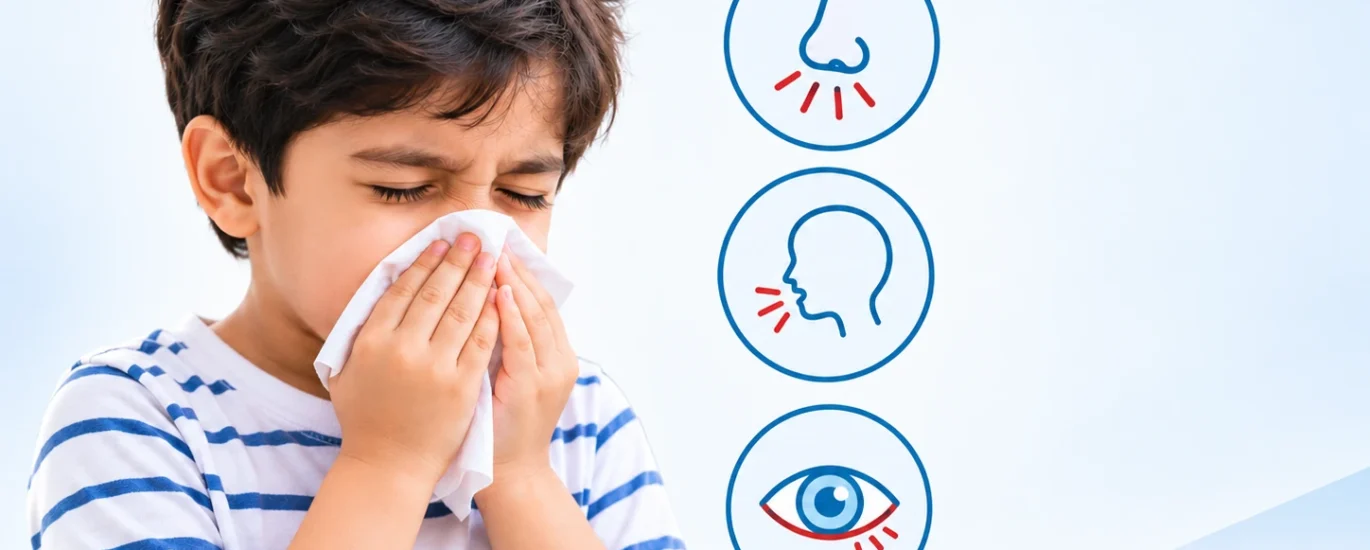
Have you noticed your child sneezing frequently, experiencing a persistent cough or rubbing their eyes because of irritation? These symptoms may sometimes be associated with childhood allergies rather than a common cold. Child allergies in Pune are an important health concern for parents, particularly when children are exposed to dust, pollen, air pollution, changing weather conditions and indoor allergens.
Children have developing immune systems and may react to substances that do not affect other people. Environmental factors, including construction dust, vehicle emissions, pollen and household dust mites, can contribute to allergy symptoms. Recent local reporting in Pune has also highlighted respiratory irritation and allergic complaints associated with dust and post-monsoon pollution.
Understanding the causes, recognising early symptoms and identifying possible allergy triggers can help parents take appropriate steps to protect their children’s health. This guide explains common childhood allergies, their symptoms, prevention measures and when parents should consult a paediatrician.
Key Takeaways
- Childhood allergies can cause frequent sneezing, a runny nose, persistent coughing and itchy or watery eyes.
- Common triggers include dust mites, pollen, mould, pet dander and environmental pollution.
- Allergic rhinitis is a common condition that affects children’s nose and upper respiratory system.
- Allergy symptoms can sometimes resemble a common cold, making proper medical evaluation important.
- Reducing exposure to known allergens may help manage recurring symptoms.
- Persistent coughing, breathing difficulties or recurring allergic symptoms require medical attention.
- Parents should avoid giving allergy medicines without appropriate medical guidance.
Table of Contents
What Are Childhood Allergies?
Childhood allergies occur when a child’s immune system reacts to a normally harmless substance called an allergen. The immune system mistakenly identifies the substance as a potential threat and releases chemicals, including histamine, which can trigger an allergic reaction.
Depending on the allergen and the child’s sensitivity, symptoms may affect different parts of the body.
Common types of childhood allergies include:
- Allergic rhinitis: Causes sneezing, a runny or blocked nose and nasal itching.
- Eye allergies (allergic conjunctivitis): Can cause red, itchy and watery eyes.
- Respiratory allergies: May contribute to coughing, wheezing or breathing difficulties, particularly when associated with asthma.
- Skin allergies: Can cause itching, redness, rashes or eczema.
- Food allergies: May cause reactions such as hives, swelling, vomiting or, in severe cases, anaphylaxis.
Not every child experiences the same symptoms. Some children may have seasonal allergies, while others experience symptoms throughout the year.
Why Are Child Allergies in Pune Becoming a Concern?
Environmental exposure is one factor that parents should consider when evaluating recurring allergy symptoms.
Pune has experienced rapid urban development, construction activity, increasing vehicle movement and seasonal weather changes. These environmental conditions can expose children to airborne irritants and allergens.
Some factors that may contribute to childhood allergies in Pune include:
- Construction Dust: Dust from construction sites, roadwork and renovation activities can irritate children’s nasal passages and respiratory systems.
- Vehicle Emissions: Traffic-related air pollution contains particles and gases that can irritate the airways and worsen existing respiratory conditions.
- Seasonal Pollen: Pollen from trees, grasses and flowering plants can trigger allergic reactions in sensitive children.
- Changing Weather Conditions: Seasonal changes, humidity and damp indoor environments can influence exposure to pollen and mould.
- Indoor Allergens: Dust mites, household dust, pet dander and mould can trigger symptoms even when children remain indoors.
According to the Indian Academy of Pediatrics, air pollution is an important environmental contributor to respiratory allergies and asthma in children.
Parents should remember that not every cough or sneeze is caused by pollution or allergies. A child’s symptoms need to be evaluated in their clinical context.
Common Causes of Allergies in Children
Identifying the possible trigger is an important part of managing recurring allergic symptoms. Several indoor and outdoor substances can cause reactions in children.
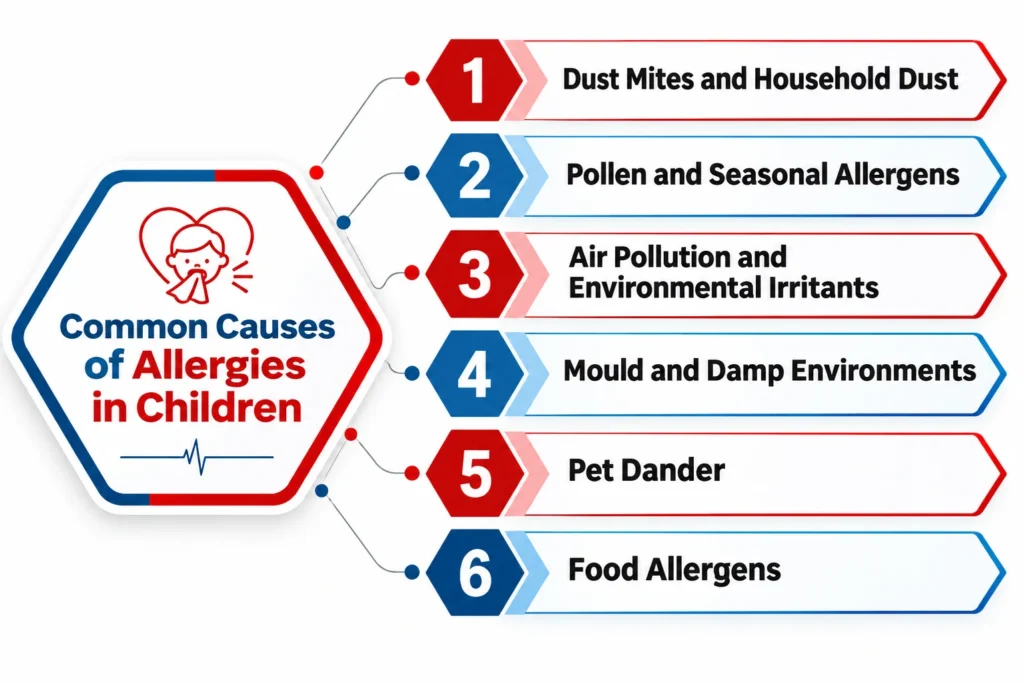
1. Dust Mites and Household Dust
Dust mites are microscopic organisms commonly found in mattresses, pillows, carpets, upholstered furniture and bedding.
Children sensitive to dust mites may experience:
- Frequent morning sneezing
- A blocked or runny nose
- Nasal itching
- Watery eyes
- Recurring coughing
Regular cleaning, washing bedding and reducing dust accumulation may help minimise exposure.
2. Pollen and Seasonal Allergens
Pollen released by trees, grasses and weeds can trigger seasonal allergic reactions.
Children exposed to pollen may experience sneezing, itchy eyes, nasal congestion and a runny nose, particularly during periods of increased pollen exposure.
3. Air Pollution and Environmental Irritants
Air pollution, smoke, vehicle emissions and construction dust can irritate children’s respiratory passages.
These substances may worsen existing allergic rhinitis or asthma symptoms. Although pollution can act as an irritant, it is not necessarily an allergen itself.
Parents can monitor local air quality and limit strenuous outdoor activities when air pollution levels are high.
4. Mould and Damp Environments
Mould develops in damp areas, poorly ventilated rooms, bathrooms and spaces with water leakage.
Exposure to mould spores may trigger allergic reactions in sensitive children.
Keeping indoor spaces dry, addressing water leakage and ensuring proper ventilation can help reduce mould exposure.
5. Pet Dander
Pet dander consists of tiny skin flakes, proteins and other particles associated with animals such as cats and dogs.
Sensitive children may develop sneezing, nasal congestion, itchy eyes or respiratory symptoms after exposure.
6. Food Allergens
Certain foods, including milk, eggs, peanuts, tree nuts, soy, wheat and seafood, can trigger allergic reactions in susceptible children.
Food allergy symptoms may include skin rashes, itching, swelling, vomiting and breathing difficulties.
Severe allergic reactions require immediate emergency medical attention.
Symptoms of Allergies in Children
Recognising allergy symptoms early can help parents understand when their child may need medical evaluation.
Common symptoms include:
1. Nasal Symptoms
- Repeated sneezing
- Runny nose
- Blocked nose
- Itchy nose
- Frequent nose rubbing
2. Eye Symptoms
- Redness
- Itching
- Excessive watering
- Swelling around the eyes
- Discomfort in bright environments
3. Respiratory Symptoms
- Persistent or recurring cough
- Throat irritation
- Postnasal drip
- Wheezing in children with associated airway conditions
4. Other Symptoms
- Skin itching
- Rashes or hives
- Disturbed sleep
- Tiredness due to nasal congestion
Some children may experience multiple symptoms simultaneously. Persistent nasal congestion and poor sleep can also affect concentration, school activities and everyday comfort.
How to Differentiate Allergies from a Common Cold?
Childhood allergies and common colds can produce similar symptoms. However, certain patterns may help parents recognise the difference.
|
Symptom |
Allergies |
Common Cold |
|
Sneezing |
Frequent |
Common |
|
Runny nose |
Often clear and watery |
May change in consistency |
|
Itchy eyes |
Common |
Less common |
|
Fever |
Usually absent |
May occur |
|
Duration |
Can continue with exposure |
Usually improves within 7–10 days |
|
Trigger |
Allergen exposure |
Viral infection |
Important: These differences are general indicators, not a substitute for diagnosis. Allergies and respiratory infections can also occur together.
If symptoms persist, return frequently or interfere with your child’s sleep and daily activities, consult a healthcare professional.
How Are Child Allergies in Pune Diagnosed?
Diagnosing childhood allergies involves understanding the child’s symptoms, medical history and possible exposure to allergens.
A paediatrician may consider the following:
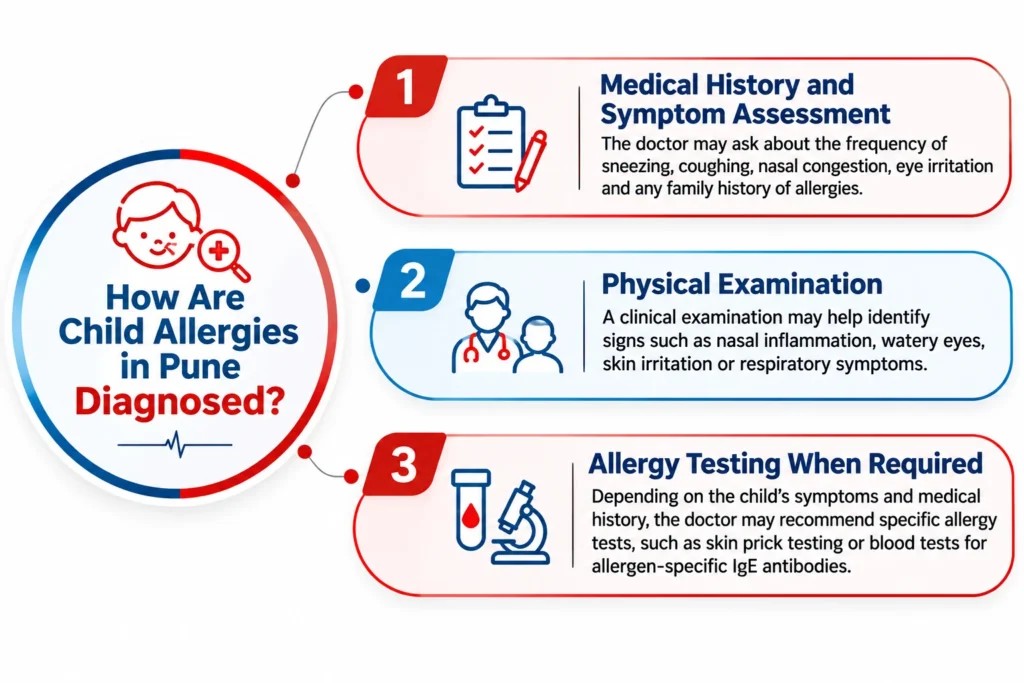
1. Medical History and Symptom Assessment
The doctor may ask about the frequency of sneezing, coughing, nasal congestion, eye irritation and any family history of allergies.
Parents should also explain when symptoms occur, such as after playing outdoors, waking up in the morning or spending time in dusty environments.
2. Physical Examination
A clinical examination may help identify signs such as nasal inflammation, watery eyes, skin irritation or respiratory symptoms.
3. Allergy Testing When Required
Depending on the child’s symptoms and medical history, the doctor may recommend specific allergy investigations.
These may include skin prick testing or blood tests for allergen-specific IgE antibodies.
Not every child requires allergy testing. The decision depends on clinical findings and whether identifying a particular allergen would help guide management.

Ways to Prevent Allergies in Children
Although it may not be possible to eliminate every allergen, reducing exposure to known triggers can help minimise allergy flare-ups.
Here are some practical measures parents can follow:
1. Maintain a Clean Indoor Environment
- Clean floors and frequently used surfaces regularly.
- Use a damp cloth to remove household dust.
- Wash bedsheets, pillow covers and blankets regularly.
- Reduce dust accumulation around sleeping areas.
2. Reduce Outdoor Allergen Exposure
- Check local air quality before outdoor activities.
- Avoid unnecessary outdoor exposure during periods of high pollution.
- Encourage children to wash their hands and face after outdoor play.
- Change dusty outdoor clothes after returning home.
3. Improve Indoor Air Quality
- Ensure proper ventilation.
- Address dampness and water leakage.
- Avoid indoor smoking and exposure to strong fumes.
- Consider suitable air filtration where appropriate.
4. Maintain Personal Hygiene
- Encourage regular handwashing.
- Avoid rubbing itchy eyes.
- Keep children’s nails clean and trimmed.
- Encourage children to avoid touching their face with dusty hands.
5. Identify and Avoid Known Triggers
Maintain a simple record of your child’s symptoms, including when they occur and possible environmental or food exposures.
This information can help the paediatrician identify patterns and determine whether further evaluation is needed.
When Should Parents Consult a Paediatrician?
Parents should seek medical advice when allergy-like symptoms occur frequently or do not improve.
Consider consulting a paediatrician if your child experiences:
- Repeated sneezing or nasal congestion.
- A persistent or recurring cough.
- Frequent itchy, red or watery eyes.
- Symptoms that disturb sleep or affect school activities.
- Recurring skin rashes or unexplained itching.
- Symptoms that continue despite reducing exposure to suspected allergens.
When is it an emergency?
Sudden breathing difficulty, swelling of the tongue or throat, fainting, or a rapidly developing allergic reaction involving multiple body systems may indicate anaphylaxis.
Seek emergency medical care immediately. Do not wait for a routine appointment.
Early medical assessment can help identify the cause of symptoms and determine an appropriate management plan based on the child’s age and health needs.
Conclusion
Childhood allergies can affect a child’s breathing comfort, sleep, school activities and overall well-being. In Pune, exposure to construction dust, vehicle emissions, pollen, household dust mites and other environmental triggers may contribute to allergy-related symptoms in sensitive children.
Understanding the causes of child allergies in Pune, recognising early warning signs and reducing exposure to known allergens can help parents make informed healthcare decisions. Persistent sneezing, recurring cough and eye irritation should not always be dismissed as seasonal discomfort. Appropriate medical evaluation is important to distinguish allergies from infections and other respiratory conditions.
For trusted Child fever treatment in Pune and comprehensive Child medical care in Pune, schedule a consultation with Dr. Kuldip Shimpi at Medisure Health Clinics. With a child-focused approach and personalized care, Dr. Shimpi helps parents navigate childhood illnesses with confidence and ensures children receive the medical attention they deserve.
Medical Disclaimer: This article is intended for general health education and awareness. It does not replace professional medical consultation, diagnosis or treatment. Parents should seek appropriate medical advice for their child’s symptoms. Do not start or change medicines without consulting a qualified healthcare professional.
FAQs
(Frequently Asked Questions)
1. What are the common signs of allergies in children?
Common signs include frequent sneezing, a runny or blocked nose, itchy and watery eyes, nasal irritation, recurring coughing and skin rashes. Symptoms vary depending on the allergen and the child’s sensitivity.
2. What causes frequent sneezing in children?
Frequent sneezing may be triggered by dust mites, pollen, mould, pet dander and other airborne allergens. Viral infections and environmental irritants can also cause sneezing.
3. Can air pollution cause allergies in children?
Air pollution can irritate children’s airways and worsen existing allergic rhinitis or asthma symptoms. Pollution particles may also increase sensitivity to certain airborne allergens.
4. How can parents identify dust allergies in children?
Recurring morning sneezing, nasal congestion, runny nose and itchy eyes may suggest sensitivity to household dust or dust mites. However, a healthcare professional should evaluate persistent symptoms to identify the underlying cause.
5. How long do childhood allergies last?
The duration depends on the allergen and the child’s sensitivity. Seasonal allergies may occur during particular periods, whereas reactions to indoor allergens such as dust mites can occur throughout the year.
6. Can childhood allergies cause a persistent cough?
Yes. Allergic rhinitis can contribute to coughing through postnasal drip and throat irritation. Allergies may also coexist with asthma, which can cause recurring cough and wheezing. Persistent coughing needs medical evaluation.
7. When should I consult a paediatrician for my child's allergies in Pune?
Consult a paediatrician if your child experiences recurring sneezing, persistent coughing, frequent eye irritation, nasal congestion or symptoms that interfere with sleep and daily activities. Seek emergency care for breathing difficulty or signs of a severe allergic reaction.
8. Are childhood allergies preventable?
Not all allergies can be prevented. However, reducing exposure to known triggers, maintaining a clean indoor environment, addressing dampness and following an appropriate medical care plan may help reduce symptoms.
9. Can children develop allergies at any age?
Yes. Allergies can develop during infancy, childhood or later in life. Symptoms and triggers may change as children grow and their environmental exposures change.
10. Which doctor should I consult for recurring allergies in children?
A paediatrician can assess recurring allergy-like symptoms, evaluate possible triggers and recommend appropriate management. A specialist referral may be considered when symptoms are persistent, severe or difficult to diagnose.