

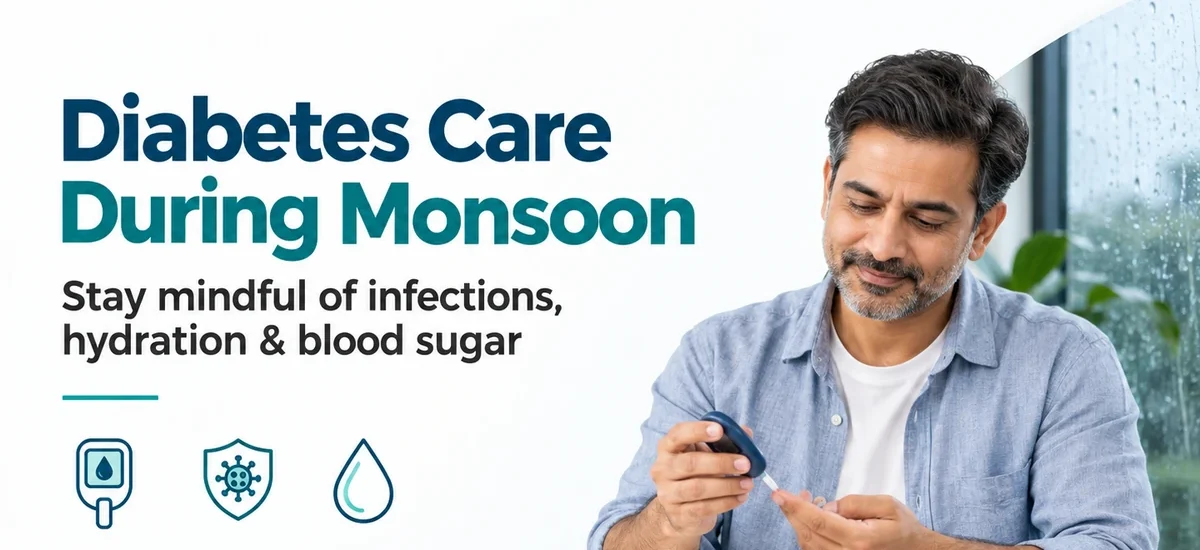
Monsoon brings relief from the heat, but it also creates conditions that can increase the risk of seasonal infections. Viral fever, flu-like illnesses, cough, cold, and stomach infections may become common during the rainy season. For people living with diabetes, these infections require extra attention because illness can affect blood sugar levels and increase the risk of dehydration and other complications.
Complete diabetes care during the monsoon is not just about controlling blood sugar. It includes regular monitoring, healthy eating, medication adherence, personal hygiene, foot care, and timely medical consultation when symptoms appear.
Whether you have type 1 diabetes, type 2 diabetes, or are at risk of developing diabetes, taking preventive steps during monsoon can help you stay healthier and manage seasonal health challenges.
Key Takeaways
- Complete diabetes care should be a priority during monsoon to maintain healthy blood sugar levels.
- Viral infections can affect blood sugar and increase the risk of dehydration in people with diabetes.
- Monitor blood sugar regularly, especially during fever or illness.
- Follow prescribed diabetes medications and consult your doctor before making any changes.
- Stay hydrated and follow a balanced, hygienic diet.
- Protect your feet from dampness, wounds, and infections during the rainy season.
- Practice good hygiene and take precautions against mosquito-borne and water-borne infections.
- Seek timely medical advice for persistent fever, vomiting, dehydration, or unusual blood sugar fluctuations.
- Regular general physician consultations can help manage diabetes and monsoon-related health concerns.
Table of Contents
Why Diabetes Care Is Important During Monsoon
People with diabetes may have a higher risk of infections, particularly when blood glucose is not well controlled. Diabetes can affect immune function, circulation, and wound healing, making it important to manage blood sugar and recognize signs of infection early.
During monsoon, several lifestyle and environmental factors can make diabetes management more challenging:
- Reduced physical activity because of continuous rain.
- Changes in eating habits, including fried snacks and sugary foods.
- Exposure to contaminated food and water.
- Increased humidity and dampness, which can contribute to skin and fungal problems.
- Seasonal viral and other infections that may disturb blood sugar control.
A person with diabetes may experience changes in blood glucose during illness, even when eating less than usual. This is why diabetes care and infection prevention should go hand in hand during the rainy season.
How Viral Infections Affect People With Diabetes
Viral infections can place additional stress on the body. During an infection, the body releases stress hormones that may cause blood sugar levels to rise. Fever, reduced food intake, vomiting, or diarrhoea can also affect glucose levels and hydration.
1. Increased Risk of Blood Sugar Fluctuations
Blood sugar may increase during fever or infection. In some situations, reduced food intake combined with diabetes medicines or insulin can cause low blood sugar.
Regular monitoring is therefore important, especially when you are unwell.
2. Dehydration During Fever or Stomach Infections
Fever, sweating, vomiting, and loose motions can lead to fluid loss. High blood sugar can also increase urination and contribute to dehydration.
People with diabetes should pay attention to fluid intake and signs such as dry mouth, dizziness, reduced urination, or unusual weakness.
3. Slower Recovery From Some Infections
Uncontrolled blood sugar can affect the body’s ability to fight infections and heal wounds. Maintaining diabetes control is an important part of overall infection management.
Common Monsoon Infections to Be Aware Of
Monsoon-related health concerns vary by location and exposure. In India, seasonal illnesses may include viral fever, influenza, dengue, malaria, chikungunya, leptospirosis, and water- or food-borne infections.
1. Viral Fever, Flu and Respiratory Infections
Symptoms may include:
- Fever.
- Cough or sore throat.
- Body ache.
- Fatigue.
- Headache.
- Runny nose.
People with diabetes should monitor their condition carefully and seek medical advice if symptoms are persistent, severe, or accompanied by blood sugar changes.
2. Dengue and Other Mosquito-Borne Infections
Mosquito breeding can increase during the rainy season. Dengue, malaria, and chikungunya can cause fever, body pain, weakness, and other symptoms.
A fever should not automatically be assumed to be a common viral infection. A doctor may recommend appropriate tests based on symptoms, exposure, and local disease patterns.
Important: If dengue is suspected, do not self-medicate with ibuprofen or aspirin. Consult a doctor about safe fever management and testing.
3. Water-Borne and Food-Borne Infections
Contaminated water and food can cause illnesses that may involve vomiting, diarrhoea, abdominal discomfort, or fever.
For people with diabetes, these symptoms can be especially concerning because fluid loss and changes in food intake can disturb blood sugar control.
4. Skin and Fungal Infections
Damp socks, wet footwear, and prolonged moisture around the feet can contribute to fungal and skin problems. People with diabetes should be especially careful about foot hygiene and small wounds.
Essential Diabetes Care Tips During Monsoon
1. Monitor Blood Sugar Regularly
Regular blood sugar monitoring helps you understand how your body is responding to food, activity, medication, and illness.
During monsoon:
- Check blood sugar according to your doctor’s recommended schedule.
- Monitor more frequently when you are sick, if advised.
- Keep a record of unusual high or low readings.
- Discuss repeated abnormal readings with your physician.
Do not change insulin or diabetes medication doses on your own.
2. Continue Prescribed Diabetes Medicines
Skipping diabetes medicines can lead to poor blood sugar control. However, illness, vomiting, dehydration, or reduced food intake may require specific medication adjustments.
Follow your doctor’s sick-day instructions. If you do not have a sick-day plan, ask your healthcare provider for one.
3. Maintain a Balanced Diet
Monsoon cravings for pakoras, samosas, sweets, and other fried snacks can make blood sugar management more difficult.
Choose:
- Balanced meals with vegetables, protein, and appropriate portions of carbohydrates.
- Whole grains and high-fibre foods, as suitable for your diet plan.
- Freshly prepared, hygienic food.
- Fruits in suitable portions.
- Healthy snacks instead of frequent sugary foods.
Avoid excessive sugary drinks, sweetened tea, and frequent fried foods.
4. Stay Hydrated
Adequate hydration is important even when the weather is cool.
Drink safe, clean water regularly. If you have kidney disease, heart failure, or a fluid restriction, follow your doctor’s specific fluid advice.
If vomiting or diarrhoea occurs, consult a healthcare professional regarding oral rehydration and diabetes medication management.
5. Stay Physically Active
Rain should not mean complete inactivity. Physical activity supports overall health and blood sugar management.
Depending on your health and fitness:
- Walk indoors.
- Try doctor-approved yoga or stretching.
- Use a treadmill if available.
- Perform simple indoor movements.
- Maintain a regular daily routine.
Avoid exercise when you are significantly unwell, dehydrated, or have very high blood sugar with symptoms. Seek medical advice when needed.
6. Maintain Personal Hygiene
Good hygiene can help reduce exposure to infections.
- Wash hands with soap and water regularly.
- Use safe drinking water.
- Wash fruits and vegetables properly.
- Avoid food from unhygienic sources.
- Keep your surroundings clean.
- Use mosquito protection and avoid stagnant water.
7. Protect Your Feet From Monsoon-Related Problems
Foot care is particularly important for people with diabetes, especially those with reduced sensation or circulation problems.
- Keep feet clean and dry.
- Change wet socks immediately.
- Wear clean, well-fitting footwear.
- Avoid walking barefoot in dirty or floodwater.
- Check feet daily for cuts, blisters, redness, swelling, or wounds.
- Do not ignore a small wound or skin infection.
Consult a doctor promptly if you notice a wound that is not healing, spreading redness, swelling, pus, or increasing pain.
Blood Sugar Management During Viral Infections
When a person with diabetes develops fever, cough, vomiting, or diarrhoea, diabetes care becomes even more important.
1. What to Do When You Are Sick
Monitor your blood glucose: Follow your healthcare provider’s instructions. Check more frequently if recommended.
Stay hydrated: Drink safe fluids as tolerated. Seek help if you cannot keep fluids down.
Continue prescribed treatment: Do not stop insulin or other medication without medical advice. Some medicines may need adjustments during dehydration or reduced food intake.
Monitor symptoms: Record temperature, blood sugar readings, food intake, and fluid intake when appropriate.
Contact your physician: If symptoms worsen, blood sugar remains unusually high or low, or you are unable to eat or drink normally.
2. When Is It an Emergency?
Seek urgent medical care if you experience:
- Difficulty breathing.
- Confusion, fainting, or severe weakness.
- Persistent vomiting or inability to drink fluids.
- Severe dehydration or very little urine.
- Severe abdominal pain.
- Very high blood sugar with vomiting, deep or rapid breathing, or unusual drowsiness.
- Severe low blood sugar that does not improve with appropriate treatment.
If you have type 1 diabetes and are sick with high blood sugar, ask your care team about ketone testing and when emergency care is needed.
Diet and Hydration Tips for Diabetic Patients During Monsoon
Food and hydration habits play a significant role in complete diabetes care during monsoon.
1. Healthy Food Choices
Prefer | Limit |
Freshly cooked balanced meals | Frequent fried snacks |
Vegetables and protein | Sugary drinks |
Appropriate fruit portions | Excess sweets |
Safe drinking water | Unhygienic street food |
Fibre-rich foods as suitable | Oversized carbohydrate portions |
2. Important Hydration Precautions
If you have diabetes along with kidney or heart conditions, hydration needs may differ. Do not force excess fluids without medical advice.
If you develop diarrhoea or vomiting, seek timely advice about fluid replacement, blood sugar monitoring, and medication adjustments.
When to Consult a General Physician During Monsoon
A general physician can assess fever, respiratory symptoms, digestive complaints, and other common illnesses. For people with diabetes, early medical advice can help identify when symptoms require testing or closer monitoring.
Consult a Doctor If You Have:
- Fever that persists or worsens.
- Repeated vomiting or loose motions.
- Persistent cough or breathing difficulty.
- Unusual blood sugar fluctuations.
- Symptoms of dehydration.
- A foot wound, swelling, or infection.
- Severe weakness or symptoms that do not improve.
Depending on the symptoms, a doctor may recommend tests such as blood glucose testing, CBC, dengue or malaria testing, urine tests, or other investigations. Testing should be based on clinical evaluation rather than assuming every monsoon fever is viral.
Conclusion
Complete diabetes care should be a priority along with protection against monsoon-related viral infections. Regular blood sugar monitoring, a balanced diet, adequate hydration, proper hygiene, foot care, and timely medical consultation are essential steps for staying healthy during the rainy season.
If you are experiencing fever, weakness, cough, digestive symptoms, or changes in blood sugar, do not ignore them. Timely evaluation can help identify the cause and guide appropriate treatment.
For diabetes management, viral infection concerns, and general health consultations, consult Dr Nitin Satav | General Physician | General Physician for appropriate medical guidance and personalized care.
FAQs
(Frequently Asked Questions)
1. Why is diabetes care important during the monsoon?
Diabetes care is important during monsoon because seasonal infections, changes in activity, dietary habits, and dehydration can affect blood sugar levels. Good diabetes management supports overall health and helps reduce the risk of complications.
2. Can viral infections increase blood sugar levels?
Yes. Fever and infections can increase blood sugar due to the body’s stress response. Reduced food intake, vomiting, or medication effects can also cause low blood sugar in some people. Regular monitoring and medical advice are important.
3. What are the best monsoon diabetes care tips?
The most important tips include monitoring blood sugar, taking prescribed medicines, maintaining a balanced diet, drinking safe water, protecting your feet, practicing hygiene, and seeking medical advice when symptoms appear.
4. What should a diabetic patient do during viral fever?
Monitor blood sugar as advised, stay hydrated, rest, follow prescribed treatment, and contact your doctor if symptoms worsen or you cannot eat or drink normally. Do not change medication doses without medical advice.
5. Can people with diabetes eat monsoon snacks?
People with diabetes can discuss suitable portions of their favourite foods with their dietitian or physician. Frequent fried snacks and sugary foods may make blood sugar management more difficult. Choose hygienically prepared food and balanced meals.
6. How can diabetic patients prevent foot infections during monsoon?
Keep feet clean and dry, change wet socks, wear suitable footwear, avoid walking barefoot in dirty water, and check feet daily for wounds or skin changes. Seek medical care promptly for signs of infection.
7. When should a diabetic patient consult a general physician for fever?
Consult a general physician if fever is persistent, severe, accompanied by dehydration, vomiting, breathing difficulty, or unusual blood sugar changes. Urgent care is needed for serious warning signs such as confusion or difficulty breathing.
8. Should diabetes medicines be stopped during viral infections?
Do not stop or change diabetes medicines without medical advice. Some medicines may require temporary adjustment during illness, dehydration, or reduced food intake. Follow your doctor’s sick-day instructions.