

Care for Children During Viral Infection: Essential Guide

Care for Children During Viral Infection: A Complete Guide for Parents

Care for children during viral infection

When your child develops a fever, cough, cold, sore throat or feels unusually tired, it is natural to feel worried. Children can become uncomfortable quickly during an illness, and parents often wonder what to feed them, how to manage fever, and whether medical attention is needed.

Viral infections are common in childhood. They may affect the respiratory system, digestive system or other parts of the body. Many mild viral illnesses improve with supportive care, but some infections can become serious, especially in babies and children with underlying health conditions.

Care for children during viral infection focuses on keeping your child comfortable, providing enough fluids and nutrition, allowing adequate rest, monitoring symptoms and recognising when professional medical care is needed.

This guide explains practical ways to care for a sick child at home, what parents should avoid, and when to consult a qualified pediatrician.

Key Takeaways 

  • Offer frequent fluids to help prevent dehydration, especially when your child has fever, vomiting or diarrhoea.
  • Encourage rest and allow your child to sleep as needed during recovery.
  • Provide small, frequent meals and familiar nutritious foods according to your child’s age and appetite.
  • Monitor temperature, breathing, urine output, activity level and changes in symptoms.
  • Use fever medicines only when appropriate for your child’s age, weight and medical condition, following professional advice or the medicine label.
  • Antibiotics do not treat viral infections unless a doctor identifies a bacterial infection that requires them.
  • Seek urgent medical attention if your child has difficulty breathing, is difficult to wake, has a seizure or shows signs of severe dehydration.
  • Consult a pediatrician when symptoms are worsening, persistent or concerning, or when your child is very young or has an underlying medical condition.

Table of Contents 

What Is a Viral Infection in Children?

A viral infection occurs when a virus enters the body and multiplies. Viruses can cause illnesses such as the common cold, influenza, respiratory syncytial virus (RSV) infection, viral gastroenteritis and other childhood infections.

Children are exposed to viruses through close contact with other children, family members, contaminated surfaces and respiratory droplets. Their developing immune systems and frequent interaction in schools, nurseries and playgroups can contribute to repeated infections.

Most uncomplicated viral infections are managed with supportive care. The exact treatment depends on the virus, the child’s age, symptoms and overall health.

Common Viral Infections in Children

Some viral illnesses commonly seen in childhood include:

  • Common cold: Often causes a runny nose, sneezing, cough and mild fever.
  • Influenza (flu): May cause fever, cough, body aches, fatigue and reduced appetite.
  • Respiratory syncytial virus (RSV): Can cause cold-like symptoms and, in some babies, breathing difficulties or bronchiolitis.
  • Viral gastroenteritis: May cause vomiting, diarrhoea, stomach discomfort and dehydration.
  • Hand, foot and mouth disease: Can cause fever, mouth sores and a rash on the hands and feet.
  • Other viral infections: Some viruses cause rashes, sore throat, eye symptoms or other problems.

Not every fever or cough is caused by a virus. Bacterial infections and other conditions can have similar symptoms. A pediatrician can assess the child when the cause is uncertain.

Common Symptoms of Viral Infection in Kids

Symptoms vary depending on the infection and the child’s age. Some children have mild symptoms, while others may become more unwell.

1. Respiratory Symptoms

Viral respiratory infections may cause:

  • Fever or feeling hot.
  • Runny or blocked nose.
  • Sneezing.
  • Cough.
  • Sore throat.
  • Hoarse voice.
  • Tiredness.
  • Reduced appetite.

2. Digestive Symptoms

Some viral infections affect the digestive system and may cause:

  • Vomiting.
  • Loose motions or diarrhoea.
  • Stomach cramps.
  • Nausea.
  • Reduced appetite.
  • Dehydration.

3. Other Symptoms

A child may also experience:

  • Headache.
  • Body aches.
  • Chills.
  • Irritability.
  • Increased sleepiness.
  • Skin rash with certain infections.

Important: Symptoms alone cannot always identify the virus. If your child’s symptoms are severe, unusual or worsening, consult a qualified pediatrician.

How to Care for Children During Viral Infection at Home

When a child has a mild viral infection and is otherwise alert, breathing comfortably and drinking adequately, home care may help support recovery. Parents should focus on comfort, fluids, nutrition and regular observation.
child_viral_infection

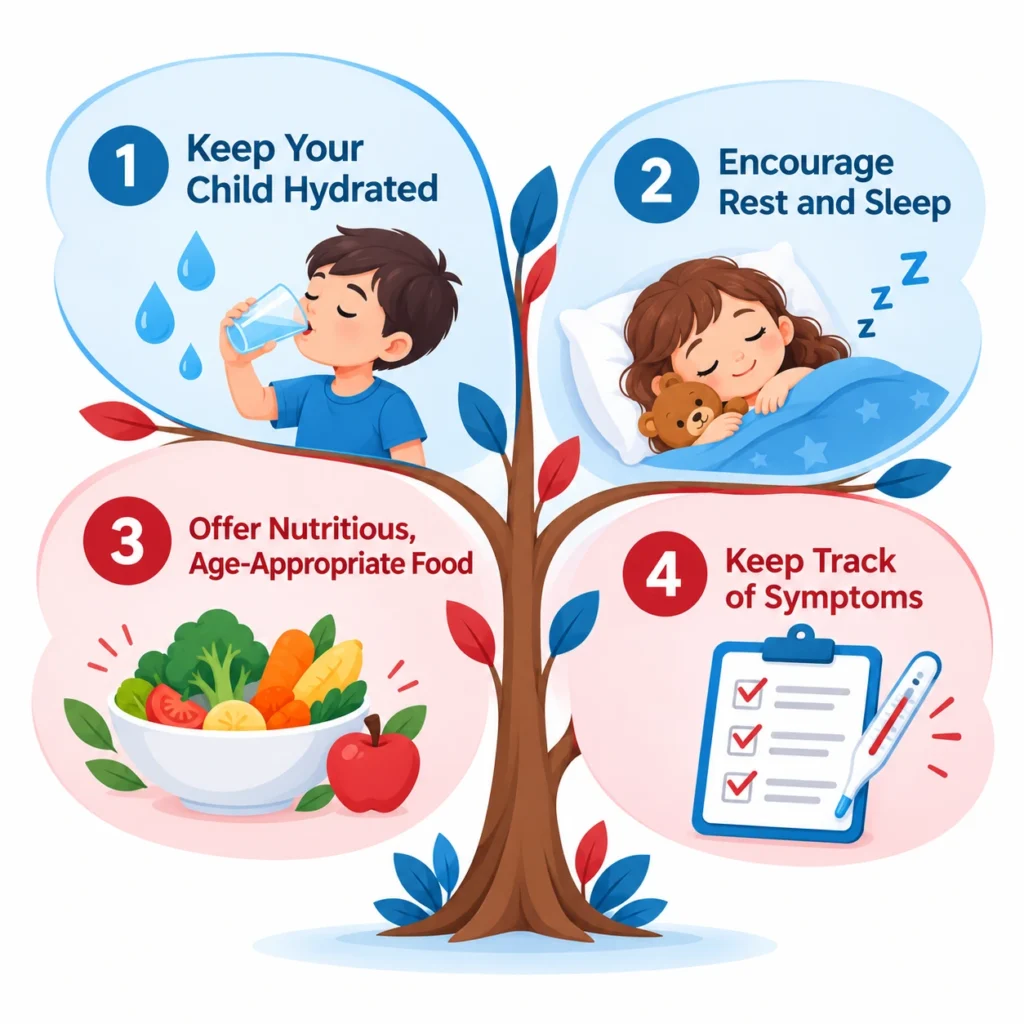
1. Keep Your Child Hydrated

Fluids are one of the most important parts of caring for a sick child. Fever, sweating, vomiting and diarrhoea can increase fluid loss.

Offer fluids regularly rather than waiting until your child asks for a drink.

Depending on the child’s age and usual diet, suitable options may include:

  • Breast milk for breastfeeding infants.
  • Formula milk for infants who use formula.
  • Water for children who are old enough to drink it.
  • Oral rehydration solution (ORS) when appropriate, particularly with vomiting or diarrhoea.
  • Soups and other suitable fluids.
  • Usual milk feeds, if tolerated.

For children with vomiting, try small, frequent sips. If the child cannot keep fluids down, medical advice is important.

Signs Your Child May Be Dehydrated

Watch for:

  • Less frequent urination or fewer wet nappies.
  • Dry mouth or tongue.
  • Few or no tears when crying.
  • Unusual sleepiness or weakness.
  • Sunken eyes.
  • Dizziness in older children.
  • In babies, a sunken soft spot may be a concerning sign.

Seek medical attention promptly if you suspect significant dehydration. Babies, especially young infants, can become dehydrated more quickly.

2. Encourage Rest and Sleep

The body needs energy to respond to infection. Your child may sleep more than usual or prefer quiet activities.

Helpful ways to support rest include:

  • Keep the room comfortable and well ventilated.
  • Allow your child to sleep when tired.
  • Offer quiet play, reading or gentle activities when awake.
  • Avoid forcing your child to attend school or play when unwell.
  • Follow medical advice about returning to normal activities.

Rest does not mean your child must remain in bed all day. If they feel comfortable and are alert, gentle activity is usually fine.

3. Offer Nutritious, Age-Appropriate Food

Children may eat less during viral infections. A temporary reduction in appetite is common, but maintaining fluid intake is especially important.

Offer small portions of familiar foods such as:

  • Khichdi.
  • Rice and dal.
  • Soft-cooked vegetables.
  • Roti with suitable accompaniments.
  • Bananas and other age-appropriate fruits.
  • Curd or yoghurt, if tolerated.
  • Eggs or other usual protein foods, if appropriate for the child’s age and diet.
  • Soups and other familiar meals.

Do not force-feed your child. Offer food patiently and allow them to eat according to their appetite, while continuing to encourage fluids.

For infants: Continue breastfeeding or normal formula feeding. Babies under 6 months should not be given plain water routinely unless advised by a healthcare professional.

4. Keep Track of Symptoms

A simple symptom record can help parents and pediatricians understand how the illness is progressing.

Record:

What to monitor

What to note

Temperature

Readings, timing and duration of fever

Fluids

What your child drinks and whether vomiting occurs

Urine

Wet nappies or frequency of urination

Appetite

Whether the child is eating less than usual

Breathing

Any fast breathing, wheezing or difficulty breathing

Activity

Alertness, playfulness and unusual sleepiness

Symptoms

Cough, cold, vomiting, diarrhoea, rash or pain

If you visit a pediatrician, sharing this information can make the consultation more useful.

Managing Fever and Body Discomfort

Fever is a natural response of the body to infection. It does not automatically mean that a child has a serious illness.

The main goal of fever care is to keep the child comfortable, maintain hydration and identify any concerning symptoms.

1. What Parents Can Do When a Child Has Fever

  1. Check the temperature using a reliable thermometer.
  2. Encourage regular fluid intake.
  3. Dress the child in comfortable, lightweight clothing.
  4. Keep the room at a comfortable temperature.
  5. Allow rest.
  6. Use fever medicine only when appropriate and according to the child’s age, weight and medical advice.

2. Can Parents Give Paracetamol for Viral Fever?

Paracetamol may help reduce fever and discomfort in children when used at the correct dose. The dose should be based on the child’s weight, the medicine’s strength and the instructions provided by a healthcare professional or the product label.

Do not give repeated doses too close together or exceed the recommended daily amount.

Ibuprofen may be appropriate for some children, but it is not suitable for every child, particularly some children who are dehydrated or have certain medical conditions. Consult a pediatrician or pharmacist if you are unsure.

3. What About Sponging and Cold Baths?

Routine cold-water baths, ice packs or alcohol rubs are not recommended for managing fever in children. They can cause discomfort or shivering.

If your child is uncomfortable, use comfortable room temperatures and appropriate clothing. Follow your pediatrician’s advice regarding fever management.

4. When Is Fever Concerning?

The seriousness of a fever depends on the child’s age, temperature, symptoms and general condition.

Important age-specific guidance:

  • Babies younger than 3 months: A temperature of 38°C (100.4°F) or higher requires prompt medical assessment.
  • Older infants and children: Fever accompanied by breathing difficulty, severe weakness, dehydration, seizure, stiff neck, unusual rash or worsening symptoms requires medical attention.
  • Any child: A fever that persists, returns repeatedly or concerns you should be assessed by a pediatrician.

Do not judge the severity of illness by temperature alone. A child’s breathing, alertness, hydration and overall condition matter.

Nutrition and Hydration During Illness

A common concern among parents is, “My child is not eating properly during viral infection. What should I do?”

In many mild illnesses, children eat less for a few days. The priority is to prevent dehydration and offer suitable nutrition without creating pressure around meals.

1. Foods That May Be Easier to Tolerate

Depending on age and appetite, parents can offer:

  • Soft, familiar meals: Khichdi, rice, dal, soft vegetables and other usual home-cooked foods can be offered in small portions.
  • Fruits: Age-appropriate fruits such as bananas or soft fruit may be suitable if your child tolerates them.
  • Soups and fluids: Suitable soups and fluids can help support hydration and provide some nutrition.
  • Usual dairy and protein foods: Curd, yoghurt, eggs and other familiar foods may be offered when suitable for the child’s age and tolerance.

2. What If the Child Refuses Food?

Try the following:

  • Offer small meals more frequently.
  • Give foods the child usually likes.
  • Avoid forcing or scolding the child for not eating.
  • Keep offering fluids.
  • Observe whether the child is urinating normally.
  • Consult a pediatrician if poor intake continues or your child becomes weak or dehydrated.

3. Should Parents Give Vitamin Supplements During Viral Infection?

Not every child needs vitamins or supplements during an infection. Supplements should not replace a balanced diet, fluids or medical assessment.

If your child has a known nutritional deficiency, poor growth, a restricted diet or another medical condition, discuss supplementation with a pediatrician.

Rest, Sleep and Comfort

A sick child may become irritable, clingy or less interested in play. This can be part of the illness, but parents should continue to monitor alertness.

1. Ways to Make Your Child Comfortable

  • Keep bedding clean and comfortable.
  • Offer extra reassurance and cuddles when appropriate.
  • Reduce loud noise and excessive activity.
  • Keep the child away from smoke and strong irritants.
  • Use saline nasal drops or spray when appropriate for nasal congestion.
  • For older children, warm fluids may soothe a sore throat.
  • Follow age-appropriate safety advice for sleep.

Sleep safety for babies: Continue to follow safe-sleep practices. Babies should sleep on their backs on a firm, flat surface, without loose pillows, blankets or soft toys.

2. Managing Cough and Blocked Nose

For children with a cold:

  • Saline nasal drops can help loosen mucus.
  • Gentle nose clearing may help infants feed more comfortably.
  • Offer fluids regularly.
  • Keep the child away from cigarette smoke.
  • Consult a pediatrician if the cough becomes severe or breathing changes.

Honey may help relieve cough in children older than 1 year. Never give honey to a baby under 12 months because of the risk of infant botulism.

Hygiene and Preventing the Spread of Infection

Many viral infections spread through respiratory droplets, direct contact or contaminated hands and surfaces. Good hygiene helps reduce transmission within the family.

1. Practical Hygiene Steps

  1. Wash hands regularly with soap and water.
  2. Teach children to cover coughs and sneezes with a tissue or elbow.
  3. Dispose of used tissues properly.
  4. Avoid sharing cups, spoons and towels.
  5. Clean frequently touched surfaces when someone is ill.
  6. Keep sick children away from vulnerable family members where practical.
  7. Ensure good ventilation in indoor spaces.
  8. Follow school or childcare policies regarding illness.

2. Should a Child Attend School During Viral Infection?

A child with fever, significant fatigue, vomiting, diarrhoea or symptoms that prevent normal participation should generally stay home.

The child can return to school when they are well enough to participate, fever has resolved without fever-reducing medicine, and any applicable school or local public-health guidance is met.

For specific infections, the return-to-school period may differ. Ask your pediatrician if you are unsure.

What Parents Should Avoid During Viral Infection

When children are sick, parents may receive many home remedies and medication suggestions. Not all are safe or useful.
what-parents-should-avoid-during-viral-infection

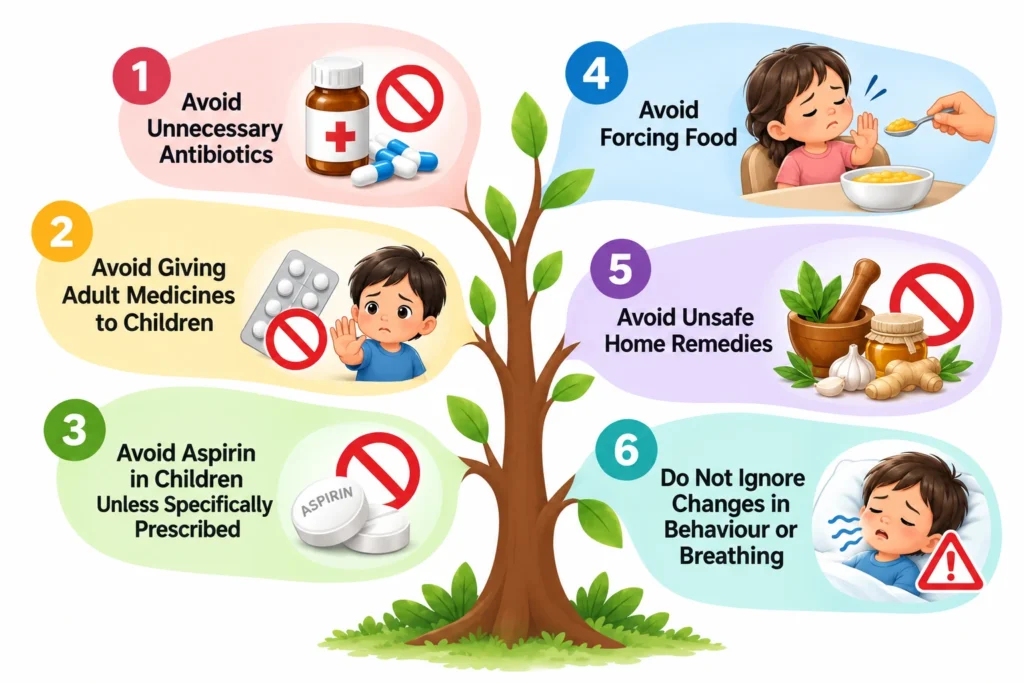
1. Avoid Unnecessary Antibiotics

Antibiotics treat certain bacterial infections. They do not treat viruses such as those that cause most common colds.

Giving antibiotics without a doctor’s advice can cause side effects and contribute to antibiotic resistance.

If a pediatrician suspects a bacterial infection, they may recommend appropriate testing or treatment.

2. Avoid Giving Adult Medicines to Children

Some medicines that are suitable for adults can be unsafe for children. Always check the child’s age, weight, medicine strength and dosage instructions.

Avoid giving multiple cold and flu medicines together without professional guidance, as they may contain the same active ingredients.

3. Avoid Aspirin in Children Unless Specifically Prescribed

Aspirin is generally not recommended for children with viral illnesses because of the risk of Reye’s syndrome, a rare but serious condition.

4. Avoid Forcing Food

A child may have a reduced appetite during illness. Force-feeding can make meals stressful.

Focus on fluids, small portions and suitable nutrition.

5. Avoid Unsafe Home Remedies

Do not use alcohol rubs, harsh herbal mixtures, unprescribed steroids or unknown remedies for treating viral infection.

Some traditional remedies may be unsuitable for infants or may interact with medicines. Consult a qualified pediatrician before giving unfamiliar treatments.

6. Do Not Ignore Changes in Behaviour or Breathing

A child who is unusually sleepy, confused, difficult to wake or struggling to breathe needs medical attention, even if the temperature is not very high.

Warning Signs: When to See a Pediatrician

Most mild viral infections improve with supportive care. However, parents should know the warning signs that indicate a child needs medical evaluation.

1. Seek Emergency Medical Help Immediately If Your Child Has:

  • Difficulty breathing, severe breathing effort or blue/grey lips.
  • Is difficult to wake, unresponsive or unusually confused.
  • A seizure, especially a first seizure.
  • Signs of severe dehydration, such as very little urine, marked weakness or inability to drink.
  • A stiff neck with fever, especially with severe headache or unusual behaviour.
  • A purple or red rash that does not fade when pressed, particularly with fever or a very unwell appearance.
  • Sudden severe deterioration.

2. Contact a Pediatrician Promptly If Your Child Has:

  • Fever in a baby younger than 3 months.
  • Persistent or worsening fever.
  • Repeated vomiting or diarrhoea.
  • Poor fluid intake or reduced urine output.
  • Persistent cough, wheezing or breathing that seems faster than usual.
  • Significant ear pain, severe sore throat or persistent abdominal pain.
  • Unusual sleepiness, irritability or reduced activity.
  • A medical condition that increases the risk of complications.

3. When Should Parents Consult a Pediatrician for Viral Fever?

Parents should consult a pediatrician if the child is very young, symptoms are worsening, fever persists, the child is not drinking adequately, or there is any concern about breathing, hydration or behaviour.

A pediatrician can assess the child, identify signs of complications and determine whether any testing or specific treatment is needed.

How to Reduce Future Viral Infections in Children

It is not possible to prevent every viral infection, especially in young children who attend school or childcare. However, certain habits can reduce the risk of illness and help protect children from serious infections.

1. Keep Vaccinations Up to Date

Vaccinations help protect children against several serious infectious diseases, including certain viral infections.

Follow the recommended immunisation schedule for your child’s age and consult your pediatrician about any missed or additional vaccines.

2. Encourage Regular Handwashing

Teach children to wash their hands:

  • Before eating.
  • After using the toilet.
  • After playing outside.
  • After coughing or sneezing.
  • After contact with someone who is unwell.

3. Support Healthy Daily Habits

Encourage:

  • Adequate sleep.
  • A balanced diet.
  • Regular physical activity appropriate for age.
  • Good hydration.
  • A smoke-free environment.
  • Age-appropriate personal hygiene.

4. Avoid Unnecessary Exposure When Someone Is Sick

When a family member has a contagious illness, reduce close contact where practical, improve ventilation and follow medical guidance.

How Long Does Recovery Take?

Recovery time depends on the virus, the child’s age, overall health and the severity of symptoms.

Many uncomplicated common colds improve over approximately 7–10 days, although cough or tiredness may last longer. Other viral infections can have different recovery periods.

1. Signs That Your Child May Be Recovering

  • Fever has resolved.
  • Appetite gradually improves.
  • Drinking becomes easier.
  • Urination returns to normal.
  • The child becomes more active and alert.
  • Cough, cold or other symptoms gradually improve.

2. What If Symptoms Are Not Improving?

If your child is getting worse, remains unusually tired, is drinking poorly or has persistent fever, arrange a pediatrician consultation.

Do not wait for a fixed number of days if your child has concerning symptoms. Babies, children with chronic medical conditions and children with a weakened immune system may need earlier assessment.

Conclusion

Caring for children during viral infection involves more than treating fever. Parents should focus on hydration, nutritious age-appropriate food, rest, comfort, hygiene and regular observation. Most mild viral infections can be managed with supportive care, but it is important to recognise warning signs such as breathing difficulty, severe dehydration, unusual sleepiness or persistent worsening symptoms.

If you are worried about your child’s health, consult a qualified pediatrician for appropriate assessment and guidance. Early medical advice can help parents understand the illness and make informed decisions about their child’s care.

Dr. Kuldip Shimpi  – Pediatrician | Trusted Child Specialist is committed to helping parents make informed decisions about children’s nutrition, growth and development.

For pediatric consultations and guidance regarding fever, cough, cold, infections, child nutrition and overall health, visit MediSure Health Clinics  to learn more.

FAQs

(Frequently Asked Questions)

1. How can I care for my child during a viral infection at home?

Provide plenty of suitable fluids, encourage rest, offer small nutritious meals and monitor temperature, urine output, breathing and activity. Use medicines only as advised. Consult a pediatrician if symptoms worsen or your child shows warning signs.

Offer familiar, age-appropriate foods such as khichdi, rice, dal, soft vegetables, fruits, curd or other usual meals. Give small portions and do not force-feed. Fluids are especially important if the child has fever, vomiting or diarrhoea.

Paracetamol may help reduce fever and discomfort when used at the correct dose for the child’s weight and age. Follow professional advice or the product label. Do not exceed the recommended dose or give medicines with overlapping ingredients.

No. Antibiotics treat certain bacterial infections, not viruses. A pediatrician may prescribe antibiotics if a bacterial infection is diagnosed or strongly suspected and treatment is appropriate.

Signs include fewer wet nappies or less urination, dry mouth, fewer tears, unusual sleepiness, weakness and sunken eyes. If your child cannot drink, is repeatedly vomiting or shows severe dehydration, seek medical attention promptly.

Consult a pediatrician if your child is very young, fever persists or worsens, the child is drinking poorly, breathing changes, urine output decreases or you are concerned about their condition. A fever of 38°C or higher in a baby under 3 months needs prompt medical assessment.

A child with fever, significant fatigue, vomiting or diarrhoea should stay home. Return when the child is well enough to participate, fever has resolved without fever-reducing medicine, and any applicable school guidance is met.

Many common colds improve within about 7–10 days, although cough or tiredness can last longer. Recovery varies by infection. If symptoms worsen, persist unusually or your child is not improving, consult a pediatrician.